Looking for the ideal AI assistant? We tested the most powerful chatbots and compared their capabilities to make your decision easier. See which one best suits your needs!
Introduction
Not long ago, ChatGPT was the primary AI chatbot with minimal competition. Today, however, strong competition comes from alternatives like Claude and Jasper, which bring unique features and capabilities. Does this mean ChatGPT is still the best choice, or have new AI models surpassed it? In this article, we will compare them and find out which one truly offers the best performance in 2026.
Who is Leading the AI Chatbot World The AI chatbot market in 2026 is larger, more diverse, and more competitive than ever before. What started with ChatGPT has now grown into an entire ecosystem of tools—whether from tech giants or ambitious startups. ChatGPT still holds its position as the most widely used and feature-packed assistant, but fierce competition is coming from all sides.
Top AI Assistants of This Year
Tech Giants
- ChatGPT (OpenAI) – The first truly mass-adopted AI assistant. Thanks to a massive array of features and tools, it remains at the forefront.
- Gemini (Google) – Google's version of the chatbot, perfectly integrated with its services like Gmail, Docs, and Maps. It is also highly capable in voice interaction.
- Copilot (Microsoft) – An AI helper integrated directly into Office and Windows. Excellent for daily productivity.
- Claude (Anthropic) – Excels in long conversations, writing, and increasingly in agentic programming thanks to Claude Code.
- Meta AI (Meta) – Found directly in apps like Instagram and WhatsApp. Works quietly in the background and helps in real time.
Smaller Players & Startups
- Grok (xAI / Elon Musk) – A bold and highly opinionated assistant integrated into the X network (formerly Twitter). It is not afraid to be "direct."
- Perplexity – Rather than a traditional chatbot, it is a smart search engine built on LLMs. It can quickly find up-to-date information, complete with citations.
- DeepSeek (China) – A rapidly growing assistant and model that excels in logic and mathematical tasks.
- Vibe (Mistral, France) – A European alternative with an emphasis on openness, transparency, and a community-driven approach.
 ChatGPT – Best for Versatility
ChatGPT excels in its versatility, advanced AI models, and broad integration across various platforms. Whether you need to write, code, brainstorm, or analyze data, it adapts to your needs. Thanks to the GPT-5.6 models, it provides incredibly fast, intelligent, and natural-sounding responses. It also offers advanced tools for image generation and deep web browsing to retrieve current information. ChatGPT is not just a chatbot; it is a fully-fledged AI assistant.
Key Features
- Advanced tools (image generation, web browsing, file analysis)
- Personalization options (long-term memory & custom instructions)
- Broad integration (email, productivity tools, automation)
- Advanced Voice Mode (fluid real-time conversations)
- ChatGPT Pulse (daily personalized updates)
- Deep Research (autonomous multi-source analysis with reports)
Pros
- Ability to handle complex tasks (writing, programming, data analysis)
- Natural and contextually accurate responses
- Regular updates and a constantly expanding app ecosystem
Cons
- The memory feature occasionally captures irrelevant details
- The most advanced models and video generation are only available in expensive paid tiers
Pricing
- Free: GPT-5.6 Luna with limitations, including ads (in the US from Feb 2026, in the EU/CZ from Aug 2026)
- Go ($10/month): Higher message limits, access to GPT-5.6 Luna, file uploads, and image generation—but without advanced reasoning, Sora video, Codex, and Deep Research
- Plus ($20/month): Access to GPT-5.6 Sol, limited Sora video, Advanced Voice Mode, Deep Research
- Pro ($100 or $200/month): 5× ($100) or 20× ($200) higher limits than Plus, includes Pro/Astra models. The $200 version adds unlimited Sora video, a 1M token context window, and the Operator agent.
- Business ($20/user/month billed annually or $25 monthly): Collaboration and team management tools (min. 2 users)
 Google Gemini – Best for Google Ecosystem Integration
Google Gemini is designed as an intelligent AI assistant that connects flawlessly with the Google ecosystem. It offers interactive voice communication and deep web integration. Thanks to Gemini Live, Deep Research, and increasingly advanced agentic features, it is gradually shifting towards a personal assistant capable of working directly within your Gmail or Drive.
Key Features
- Real-time voice interaction – Gemini Live with camera and screen sharing
- Broad integration with Gmail, Google Docs, Maps, and Google Calendar
- Multimodal capabilities (fluidly combines text, images, audio, and video)
- Audio Overviews – summarizes uploaded documents into an engaging podcast format
- Agent capabilities: Autonomous resolution of multi-step tasks across Google apps
Pros
- Feels like a real assistant with very fast response times
- Unrivaled for Google users thanks to strong Workspace integration
- Massive context window – advanced models can analyze up to 2 million tokens at once (entire books or hours of video)
- Paid plans include Google One cloud storage
Cons
- The biggest benefits are reserved for users deeply embedded in the Google ecosystem
- Response quality for complex logical tasks occasionally falls slightly behind OpenAI or Anthropic
Pricing
- Free: Basic models, Gemini Live, and limited access to advanced features
- Google AI Plus ($4.99/month): 2× higher limits, Gemini in Gmail, NotebookLM, and 200 GB of storage
- Google AI Pro ($19.99/month): 4× higher limits, advanced models, Deep Research, Workspace integration, and 5 TB of storage
- Google AI Ultra ($99.99 or $199.99/month): 5× or 20× higher limits compared to Pro, agentic features, 20 to 30 TB of storage
 Claude – Best for Long Texts, Programming, and Reasoning
Claude (by Anthropic) has gained massive popularity due to its natural writing style and excellent logical reasoning. It is perfectly suited for working with extensive context, editing texts, and complex multi-step tasks.
Key Features
- Top-tier context retention: remembers long conversations without losing continuity
- Strong writing and editing capabilities: ideal for content creation and revision
- Handling multi-step tasks: great for research, summarization, and brainstorming
- Safe and ethical AI: built-in guardrails against harmful content
- Claude Code: autonomous workflows for programming, direct IDE integration
Pros
- More natural and engaging than many other chatbots
- Great for long texts, summarization, and brainstorming
- Opus 4 is the best model in the world for programming
Cons
- Smaller native app ecosystem compared to Google or Microsoft
- Usage limits on paid plans can be exhausted quite quickly during large data analysis
Pricing
- Free: Basic model (Claude Sonnet), limited web search
- Pro ($20/month or $17/month billed annually): Higher limits, access to the best models (Opus), Claude Code
- Max ($100 or $200/month): 5× ($100) or 20× ($200) higher limits
- Team ($25/user/month or $20 billed annually): Higher limits and team management
 Perplexity – Best for Accurate Research and Fact-Checking
Perplexity is not a traditional chatbot you visit just to chat. It is an "Answer Engine" powered by artificial intelligence. Instead of generating text from memory, it searches the internet in real time and compiles precise answers backed by clear citations and links.
Key Features
- Real-time search with direct clickable citations to sources
- Pro Search: the ability to conduct deep, multi-step research
- Perplexity Pages: a feature for easily creating structured reports from found information
- Model selection: Pro users can switch between top-tier models (GPT, Claude, Sonar)
Pros
- Minimizes hallucinations (making up facts) thanks to strict adherence to sourced data
- Saves a massive amount of time when looking for specific information, statistics, or news
- Clean and uncluttered user interface
Cons
- Not suitable for creative writing, generating fiction, or casual chatting
- Dependent on the quality of the web pages it finds
Pricing
- Free: Unlimited basic searches, limited number of in-depth "Pro Search" queries per day
- Pro ($20/month): 300 Pro Search queries per day, ability to upload and analyze files, choice of AI model
 Grok – Best for Real-Time News (and Uncensored Chat)
Grok was developed by Elon Musk's xAI as a direct component of the X network (formerly Twitter). Its main weapon is immediate access to real-time events and user discussions. Grok is intentionally designed to be "witty," "rebellious," and willing to answer controversial questions that other AIs avoid.
Key Features
- Exclusive access to X network data in real time
- "Fun Mode": Grok can answer with a dose of sarcasm and humor
- In-chat image generation with looser guardrails
- Low level of censorship and pre-set restrictions
Pros
- Unrivaled in tracking what is being discussed on the internet "right now" (breaking news)
- Answers politically or socially sensitive topics with less "moralizing"
Cons
- Often treats user opinions from social media as facts, which can lead to spreading misinformation
- Not as good at complex programming or intricate academic analysis as Claude or ChatGPT
- Tied exclusively to an X network subscription
Pricing
- Available within X network subscriptions: Premium (from approx. $8/month) or Premium+ (from approx. $16/month) depending on region and purchase platform.
 DeepSeek – Best for Logic, Math, and Coding
DeepSeek is a Chinese AI model that shocked the world by achieving performance comparable to (or better than) American models like GPT and Claude, but at a fraction of the computational cost. It quickly became a favorite tool among developers and programmers.
Key Features
- Deep Reasoning: the model (e.g., the R1 version) "thinks out loud" and breaks down complex tasks into smaller logical steps before answering
- Specialization in math, coding, and algorithmic problems
- Open-source: developers can download and modify the models for their own purposes
Pros
- Fascinating capabilities in programming and solving complex logical puzzles
- Process transparency – the user can see how the AI reached its conclusion
- Extremely cheap API access for developers
Cons
- Lacks a broad ecosystem of integrations (like Copilot or Gemini)
- May present security and compliance hurdles for large Western corporations (due to its origin)
- Worse results in purely creative writing compared to Claude
Pricing
- Free: Access via web interface / app is free.
- For developers (API), it features the lowest token prices on the market.
 Jasper – Best for Marketing and Business Content
Jasper is an AI tool for creating marketing copy, blog posts, emails, and product descriptions. Unlike general-purpose chatbots, it specializes exclusively in generating content for businesses and brands.
Key Features
- Marketing AI agents and hundreds of templates
- Jasper IQ: Setup for Brand Voice, company knowledge, and guidelines
- Generative Engine Optimization (GEO) for AI search engines
- Campaign automation and multilingual content
Pros
- Accelerates content creation through structured workflows
- Designed specifically for marketing teams; maintains the company’s tone of voice
- Unlimited content generation in paid versions
Cons
- Completely unsuitable for casual conversations, programming, or working with current news
- Higher price compared to general AI tools
- Less versatile
Pricing
- Free Trial: 7-day free trial
- Pro ($59/month billed annually or $69/month): includes 3 brand voices, access to knowledge assets, and fact-checking
- Business (custom pricing): enterprise-level security, unlimited brand voices, API access
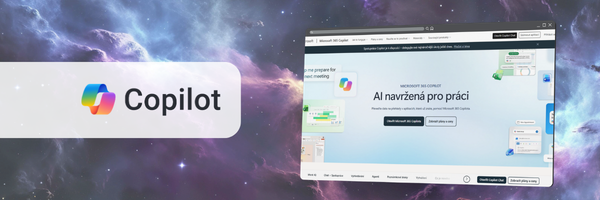 Microsoft Copilot – Best for Productivity in the Microsoft Ecosystem
Microsoft 365 Copilot is an AI assistant integrated directly into apps like Word, Excel, PowerPoint, Outlook, and Teams. It can leverage work context from corporate data and helps automate routine tasks.
Key Features
- Text and image generation using OpenAI models (e.g., the GPT-4o / GPT-5 family and DALL·E 3)
- Microsoft 365 integration: generating presentations, analyzing Excel spreadsheets, summarizing Teams meetings
- Strong web search utilizing Bing
- Integration into Windows and the Edge web browser
Pros
- Great at retrieving current information and summarizing documents
- Flawless connection to corporate emails, files, and calendars within the Microsoft environment
- Saves a massive amount of time on routine corporate tasks
Cons
- The most advanced features (Office integration) require relatively expensive licenses
- Without the Microsoft 365 ecosystem, it doesn't make as much sense as ChatGPT or Claude
Pricing
- Free: Copilot for general web AI chatting and searching
- Copilot Pro (for individuals): $20/month (access to more advanced models and integration into personal Office apps)
- Copilot for Microsoft 365 (Business): $30/user/month (an add-on to enterprise plans like Microsoft 365 Business Standard or Premium)
Conclusion
AI chatbots and assistants are more competitive in 2026 than ever before, with each tool focusing on its own strengths. ChatGPT still excels in versatility, Claude is unbeatable in long texts and editing, while Gemini and Copilot reign supreme in their respective corporate ecosystems. Among the newer challengers, Perplexity is worth your attention as the ultimate tool for finding verified facts, DeepSeek as an indispensable helper for programmers, and Grok as a rapid news filter for social media.
Not sure which AI chatbot is right for you? No problem! We offer a free 30-minute consultation with our AI experts. We will help you find the ideal tool exactly for your needs. Contact us today!